Showing posts with label Royalties. Show all posts

Monday, November 10, 2008

The New Deal: Every Piece of the Pie

It was only a little more than a year ago when Madonna and Live Nation announced an unprecedented new partnership. This new type of record deal, usually referred to as a "360 deal," allows for record labels to make money off of every aspect of an artist's career, not solely the record sales. The 360 deal, named for the number of degrees it encompasses, has been accepted by many musical behemoths, including Jay-Z (right), Nickelback, Shakira, and U2. When these deals first began to materialize, they were seen as outliers to the industry, however they have completely changed the way that major labels are doing business in a very short time. At last week's Web 2.0 summit in San Francisco, Edgar Bronfman, the CEO of Warner Music Group announced that from this point on, all record deals signed with WMG would be 360 deals. A response to the continual falling of record sales, this move will allow Warner to grab a piece of the money brought in not only by record sales, but by concert ticket sales, merchandise, websites, and endorsements as well. While taking money from more places may help to move major labels back towards the black in the short term, it stifles creativity, discourages small artists, and will hurt the labels in the long run.

The basic structure of a record deal has remained the same for as long as there have been major record labels. When an artist is signed, they are required to create a certain amount of albums for the label. The label advances the artist an agreed-upon amount of money to be used for the production of each album. Any advanced money not used in the production process can be kept by the artist, upon delivery of the album. Once the album is released, the royalty money that would be given to the artist is kept track of and kept by the label until every penny of the advance is repaid. This system is called recoupment. Only once the label is recouped will the artist see any money for their album. If the album doesn't sell enough to cover the cost of production, they will never make any money from record sales, but they are also not responsible for paying back the money that the record label gave them. The effect of this system is that many artists of all sizes today make most of their money from touring, merchandise, and however else they can monetize their fame, because the record labels do not have any claim in those areas. With the growing prominence of the 360 record deal, labels can take a piece of, and control, every income stream an artist has. This may not affect huge figureheads of the system like Madonna, or Jay-Z much, but it's a different story for small and medium sized artists who may never completely recoup, and require touring money to live.

In the case of Warner Music Group, and whichever labels go to exclusively 360 deals, the situation is viewed as a problem with return on investment. As Edgar Bronfman explained at the Web 2.0 summit: "it doesn’t make sense for labels to pour money into artist development when CD sales, their primary source of revenue, continue to decline. Without other ways to make money from an artist, they wouldn’t continue to promote artists." Music is becoming more and more easily and freely accessible, and labels don't want to get to a point where their product becomes free, and they have no other income streams. 360 deals, however, can't be a complete and long-term answer for major labels, as the money made from merchandising and ticket sales do not come close to the income from record sales. Labels must change their business structure and spending habits. It is understandable for the labels to want to prevent the loss of their income streams during the paradigm shift caused by new technology, but it creates an environment where musicians don't have much say in their career choices. Although they still currently have many options other than WMG, 360 deals seem to be the way that the industry is headed. The problem for the major labels in the long term is that these poor deals for artists will push musicians towards smaller independent labels who don't have the same requirements, ultimately digging the major labels into a deeper hole.

Tuesday, November 4, 2008

Interactive Tunes: A New Sort of "i"Tunes


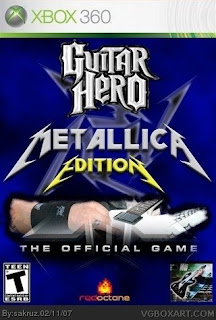
Guitar Hero swept the nation a few years ago with the revolutionary idea that video games and recorded music could merge into one entity. After Guitar Hero, came Rock Band, which expanded and deepened the concept of engaging gamers with music. They then came out with an AC/DC expansion pack (left), showing how insightful artists can use these new technology trends to make new income from old songs and recordings. As the record sales figures continue their decline, artists are searching for, and seizing new opportunities to promote and sell their music. The newest trend to increase the interactivity of music, comes downloaded right into the fan's pocket. There are a couple of remarkable new applications available for Apple's iPhone and iPod Touch. The first is a sort of downloadable digital fan page that will provide updated information, artwork, pictures, even song lyrics for certain artists, and their albums. The first band to try out this channel of promotion is Snow Patrol, with their new album "A Hundred Million Suns." Liz Goodwin, Snow Patrol's manager described it as "an interactive element; a digital booklet that will take you into the videos and content." Such a page will certainly increase a fan's feeling of personal involvement with the band. Nine Inch Nails is using downloadable iPhone and iPod Touch technology to increase personal involvement as well. They are releasing their songs in a sort of Guitar Hero type game to be purchased for Apple's handheld devices called Tap Tap Revenge (seen at the right). Both of these applications are current examples of what may become a personal interactive music industry.

I came across these harbingers of interactive music as I was browsing a couple of the blogs listed in my linkroll, the first at Music Radar by Ben Rogerson, and the second at Wired by Eliot Van Buskirk. I commented on each, the comments are linked, but for the sake of convenience, I've included my comments below:


Snow Patrol to Release iPhone App With New Album:

I think it's incredibly forward thinking of Apple and of Snow Patrol to begin to distribute these "digital booklets." While I agree, "this is hardly the groundbreaking idea that the record industry really needs," a trend of mobile and virtual interactivity needs to start somewhere, and this may be just the place. As technology continues to advance, such a template can be built upon, and eventually could become a viable income stream for artists. Pink is already streaming samples of her upcoming tracks through a similar application (http://blog.wired.com/music/2008/10/iphone-apps-wil.html). Though I am no industry guru, it does seem extremely plausible that as the services offered are able to become more valuable, fans will be willing to pay for them. For example a "channel" devoted exclusively to news, music videos, advance songs etc. of a certain artist would not be too hard to develop and sell to fans. Or your suggestion of being able to download and remix such songs on an iPod would certainly prove lucrative. What other ways do you think that this basic idea could bloom into big business and sales for artists? I think that no matter where the next few years of technology takes us, artists will have to stay at the forefront of the developments and be creative in order to find new income streams to replace the income lost due to the trend of ever-declining record sales.


Nine Inch Nails To Distribute Music Through iPhone App:

It's true, Church, Trent Reznor has been at the forefront of reinventing the music industry for the past couple of years. When he released his last album without a record label to such great success, he made history, and helped create a new business model. This new game featuring Nine Inch Nails songs is a great example of how artists are using the new trends in technology and gaming to find interesting ways to make money. It seems like the next step after the Metallica and AC/DC expansion packs for Rock Band, and now they are even coming out with an independent Rock Band-type game featuring only Beatles songs! (check out http://www.musicnewsnet.com/2008/10/the-beatles-tunes-to-rock-band-game.html). In his book "All You Need To Know About the Music Business," Donald Passman explains that the licenses to songs in video games are purchased for a flat fee, and usually not more than $6,000. This is in the 2006 edition, and while that is fairly recent, it may not be recent enough to account for what happens when the music is not IN the video game, but the music IS the video game. Bringing the gamer into the direct hands-on virtual reproduction of music certainly brings more value to the music itself. I wonder how the payment structure works when it comes to Beatles Rock Band, or Nine Inch Nails Tap Tap Revenge? I would imagine it is a sort of royalty system, since there is no way of knowing how successful such ventures will be, and thus no way of putting a pre-determined "flat fee" value on the music.

Monday, September 22, 2008

SongVest: The Music Memorabilia That Pays


Online auctions have proven themselves to be one of the most effective and lucrative ways to make money on the internet. People have sold nearly everything on eBay in the past, so it is a wonder that song royalties have never made the list until now. A new company called SongVest has taken the online auction business model and merged it with the business of the distribution of royalties. Customers bid to own a share of certain songs that are offered, including songs performed by Bon Jovi, Aerosmith, Garth Brooks and more. The winning bid for each song receives a personalized plaque, an RIAA-certified gold or platinum album award, other commemorative items, as well as the royalties awarded on the song prorated to the percentage of the song they own. They get paid whenever the songwriter does. Songwriter Mark Hudson, who has several songs that will be auctioned on SongVest, said: "No one is buying records. This to me is just another angle." In my view, SongVest is an innovative and revitalizing attempt to glean new income streams in an industry that has seen declining profits of late. Although the system doesn't seem completely ideal for the writers to me, this is a good way for them to capitalize in the changing music industry.

Whenever a song is licensed, anywhere from a TV ad to the radio, or a copy of a song is purchased, a portion of the money is paid in royalties to the songwriter. This is not to be confused with the royalties paid to the artist (granted they are sometimes the same person). There are two different types of copyrights at work, one is regarding the recording itself, and other is regarding the song itself, as composed of a written tune and lyrics. For instance Lee Hazlewood wrote a song called, "These Boots Are Made for Walkin,'" which became popular as performed by Nancy Sinatra in 1966, and again in 2005 when it was recorded by Jessica Simpson. If either song is licensed (e.g. used in a TV ad) or purchased (e.g. buying the album), Lee Hazlewood would receive his share of the royalties based on the song copyright through the song publisher (as seen on the right), while the artist would receive her portion of royalties based on the recording copyright through her record label. It is Lee Hazlewood's portion of royalties that SongVest would be auctioning off to the highest paying Simpson or Sinatra fan. The song copyright still belongs in full to the songwriter and publisher, so buying a share of the royalties does not mean buying a vote in how the song may be used.

The auctions work in a way very similar to eBay. A seller can determine a minimum bid, the duration of the auction, and what percentage of their song royalties will be auctioned. Although the first official auction will take place from October 4th through October 18th, SongVest has found success in its smaller test auctions. The first one had a $25,000 buyer for 25% royalty shares of two songs by the 80's Christian-Metal band Stryper. The picture on the left shows GB Leighton fan Toni Reynolds standing with Leighton and her newly acquired 50% share of his platinum song. When a customer wins an auction, SongVest takes responsibility for collecting and distributing the royalties to the winning bidder, after garnering 25-40% off the top of the sale price. With such huge names already in their repertoire, SongVest is expecting as much as $250,000 dollars to be spent on some of the songs in their first auction.


Song royalties are purchased in bundles all of the time, but "They're bought and sold on a pure investment basis," says David Prohaska, co-founder. "What about people who really love the music?" SongVest markets their auctions as the ultimate purchase in memorabilia, not as an investment to make money. It connects the songwriters to the fans, and that is where the value comes from. This is crucial to the preservation of good songwriters in the music industry. While a performing artist can take a top hit and tour the country with it, making hundreds of thousands of dollars per concert, the songwriter doesn't have that ability or income source to fall back on. With the recent and worsening decline of album sales, SongVest, and any other creative services that will emerge if SongVest is successful, help the songwriter capitalize on, and be compensated for their work.


It must, however, be noted that the deal is not completely ideal for the songwriter. A cut of 25-40% can easily be seen as gouging the songwriter, who may be in need of cash (a Hollywood agent only takes a 10% cut). As an Idolator.com writer assessed: "strapped singers and broke bands will happily treat their art like eBay merchandise, provided it takes care of those child-support payments and student loans." In essence, he asserts that SongVest helps songwriting artists sell-out to "the man." This may be true, but the songwriters do not give up control of the intellectual property, only forfeit some of the royalties for a price over ten times what they would receive in a standard music publishing sale, where they would no longer control the song. For a business deal similar to consignment, 40% is a large piece of the pie, but on the other hand making 60% of $250,000 simply because a rich patron really liked the theme to The Monkees would be too good to pass up for many songwriters.


Creative Commons License
This work is licensed under a Creative Commons Attribution-Noncommercial-No Derivative Works 3.0 Unported License.